

Inside this issue
All @ Sea - What's next for The Navigator?
A Pilot's technology toolkit - Ports around the world are investing in digital technology for better safety and commercial outcomes.
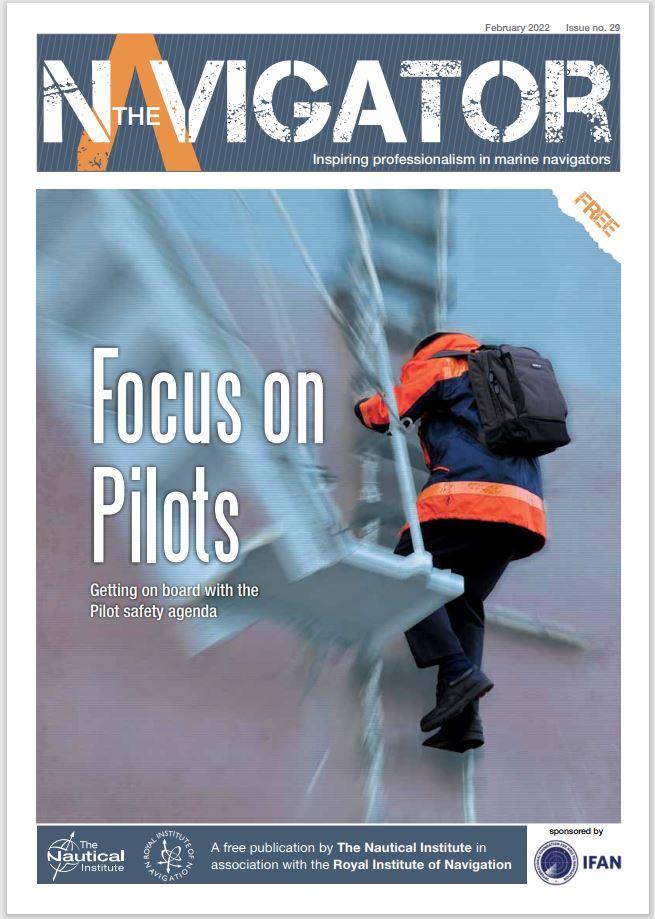
Pilot Ladder Safety - Stairway to safety - This was, essentially, a two-week online survey, carried out by Pilots, of the ladders they are using. It covered thousands of boardings or disembarkations. Nick Cutmore, IMPA’s Secretary General, examines the findings
WATCHOUT - Safety on the ropes - In this series, we take a look at issues around maritime accidents and the lessons that can be learned. Captain Kevin Vallance MNI, licensed deep sea Pilot, looks at how sharing information online can lead to better rope ladder safety compliance
Who's navigating? - Nic Gardner talks about challenges, inspiration and experience throughout her career at sea – and what comes next
WAYPOINT - Look out for ladders - A pilot ladder is an outlier among safety equipment. As seafarers, we always inspect our safety equipment before trusting our lives to it; however, Pilots have no choice but to rely on pilot ladders that they can’t inspect before boarding. This leaves seafarers – both ratings and officers – responsible for Pilots’ lives
Take 10 - These top ten tips will help make sure everything goes as smoothly as possible
WAYPOINT - Satellites and seamanship
George Shaw from the Royal Institute of Navigation looks at how good seamanship, backed up by excellent technology can change the entire situation when it comes to SAR operations.
The Navigator statementSpotlight on search and rescue
When disaster strikes at sea, every minute counts. As a navigator, you may be the closest responder to the scene. Advanced technology, clear communications and excellent teamwork can make all the difference
The Navigator statementTake 10 #43: Preparing for an SAR operation and debriefing afterwards
Ten key aspects of preparing for an SAR operation and debriefing afterwards.
The Navigator statementWho's Navigating? The learning starts here
Keith Pletschke AFNI on keeping teamwork going at sea and his own experience of SAR operations
The Navigator statementI’ve been asked to help in a search, what now?
Kamil Woźniakiewicz from Poland’s Maritime Search and Rescue Service explains the actions and expectations of an MRCC during an SAR operation.
The Navigator statementEvery ship is a Search and Rescue unit
Roland McKie from the International Maritime Rescue Federation outlines the maritime industry’s role in SAR and the importance of preparing your vessel and crew well in advance.
The Navigator statementWATCHOUT - Successful search and rescue recovers containership and crew
In this series, we take a look at maritime accident reports and the lessons that can be learned from them
The Navigator statementNavBrief - The Navigator issue 42
Today’s seas are becoming more complex to navigate, not least due to increasing numbers of restricted areas. Knowing where they are and what to do about them could make all the difference for a safe and smooth journey
The Navigator statementRites of passage: Restricted areas and the planning process
Commodore Nick Nash FNI looks at how seafarers navigate restricted areas, moving between many overlapping areas across a single passage
The Navigator statement