

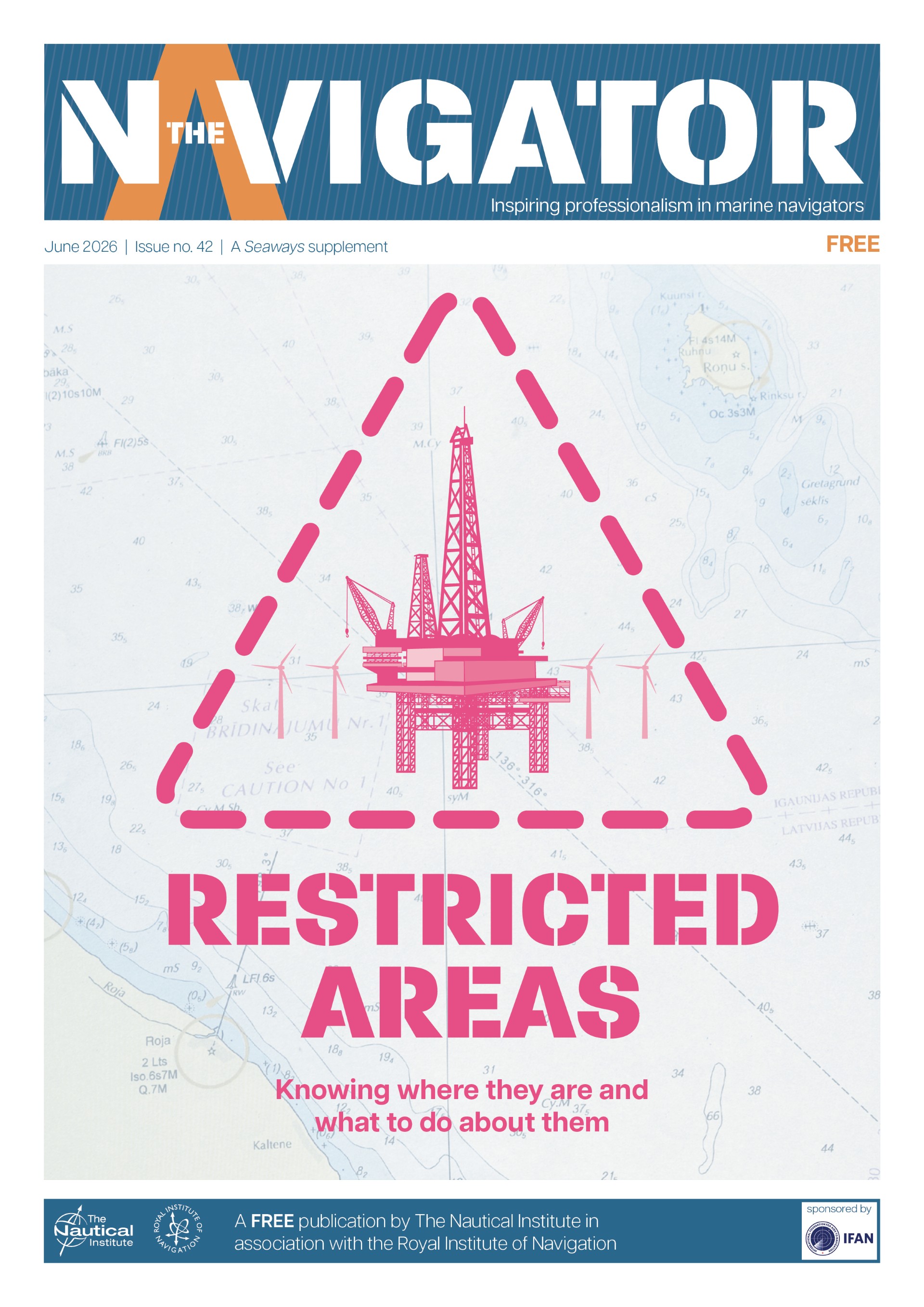
Read the digital version on your desktop by clicking on the front cover or download it here.
Inside this issue
Navbrief - Insights into workload, fatigue and performance at sea from David Patraiko FNI, Director of Projects at The Nautical Institute
A navigator's guide to charting, classifying and understanding restricted areas - The UK Hydrographic Office explains how restricted areas are classified and charted on paper charts and ENCs
Rites of passage: Restricted areas and the planning process - Commodore Nick Nash FNI looks at how seafarers navigate restricted areas, moving between many overlapping areas across a single passage
WATCHOUT - How remotely piloted aircraft are being used to help monitor compliance within restricted areas and reduce the risk of unwanted incidents
Who's navigating? - Ann Pletschke discusses her sea-based career and work ashore, researching the impact of technology on seafarers
WAYPOINT - George Shaw AFNI from the Royal Institute of Navigation explains how digital maritime services are evolving to address higher demands on mariners’ situational awareness
Take 10 - Ten tips to help you understand, identify and navigate restricted areas
Every ship is a Search and Rescue unit
Roland McKie from the International Maritime Rescue Federation outlines the maritime industry’s role in SAR and the importance of preparing your vessel and crew well in advance.
The Navigator statementWATCHOUT - Successful search and rescue recovers containership and crew
In this series, we take a look at maritime accident reports and the lessons that can be learned from them
The Navigator statementWho's Navigating? The learning starts here
Keith Pletschke AFNI on keeping teamwork going at sea and his own experience of SAR operations
The Navigator statementI’ve been asked to help in a search, what now?
Kamil Woźniakiewicz from Poland’s Maritime Search and Rescue Service explains the actions and expectations of an MRCC during an SAR operation.
The Navigator statementTake 10 #43: Preparing for an SAR operation and debriefing afterwards
Ten key aspects of preparing for an SAR operation and debriefing afterwards.
The Navigator statementSpotlight on search and rescue
When disaster strikes at sea, every minute counts. As a navigator, you may be the closest responder to the scene. Advanced technology, clear communications and excellent teamwork can make all the difference
The Navigator statementWAYPOINT - Satellites and seamanship
George Shaw from the Royal Institute of Navigation looks at how good seamanship, backed up by excellent technology can change the entire situation when it comes to SAR operations.
The Navigator statementA navigator’s guide to charting, classifying and understanding restricted areas
The UK Hydrographic Office explains how restricted areas are classified and charted on paper charts and ENCs. For navigators, restricted areas are not there just for regulatory purposes – they are important features that demand recognition and understanding at every stage of the passage.
The Navigator statementWATCHOUT - Remote control?
How remotely piloted aircraft are being used to help monitor compliance within restricted areas and reduce the risk of unwanted incidents
The Navigator statement