
Seeing the world by all available means
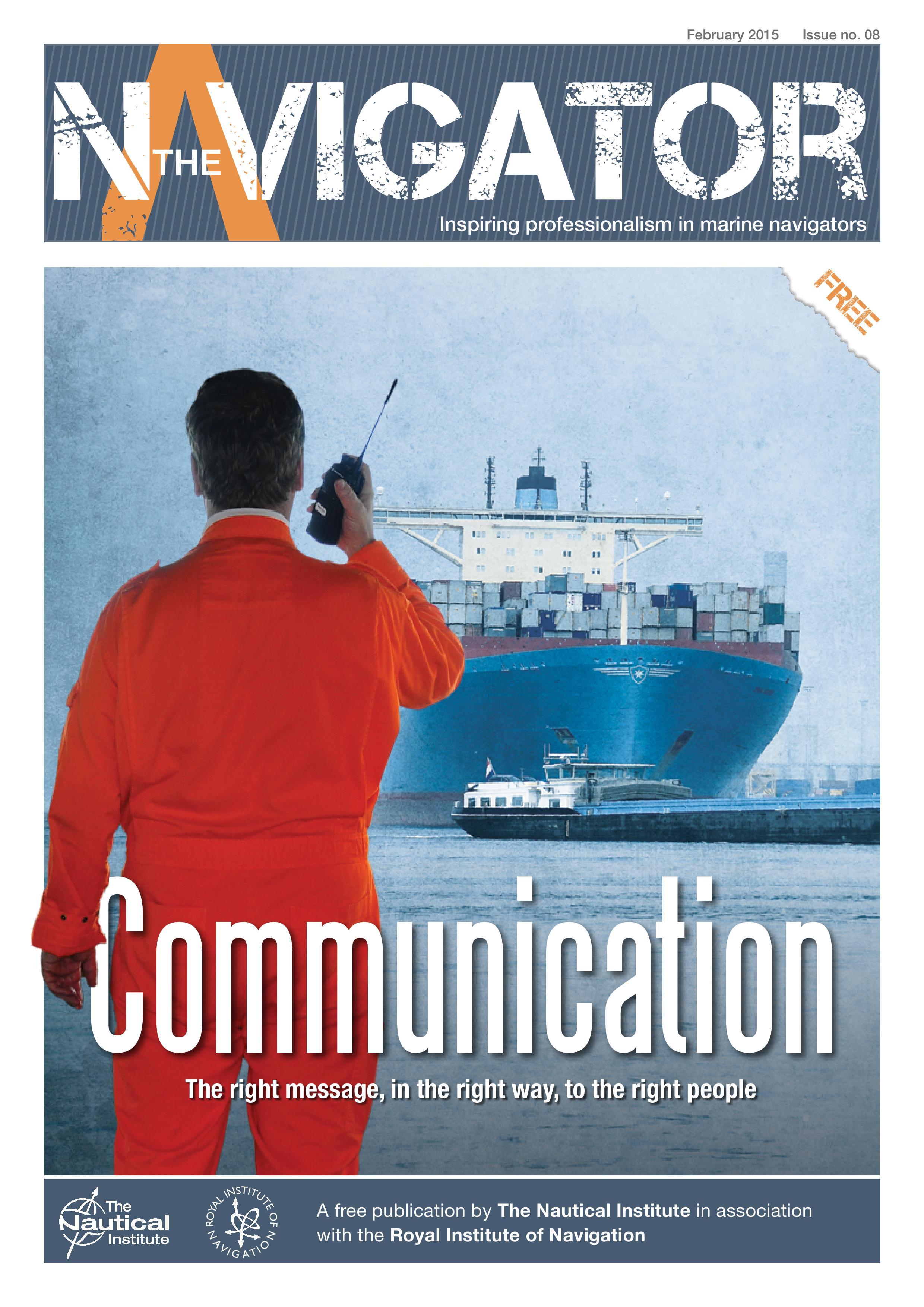
Inside this issue
All @ Sea - What's next for The Navigator?
Happy talk: verbal communication and effective navigation Our ability to communicate with each other defines our existence. Life would be very difficult if we could not communicate our thoughts to each other. Even falling in love would be hard! Communication with our fellow humans defines our relationships in life. It also defines our ability to perform our tasks and duties in the workplace. This article explains why the role of verbal communications during navigation is critical
Interpreting data- a human-technology partnership- A large amount of data is now available to us all, both on a private and professional basis. Every day, we make decisions based on incomplete information, recognise patterns and act on other behaviours that a computer would and could not do. So, while computers are a good tool to help us find out what’s going on in the world, using them in isolation is not the only way. This article looks at how to make sense of what computers are telling us and how to combine our human abilities and their technological strengths to develop effective, informed communications.
WATCHOUT - Communications Breakdown - In this series, we take a look at maritime accident reports and the lessons that can be learned
Who's navigating? - Keeping everybody in the loop - Chief Officer Vladimir Torskiy AMNI talks about his training and working life at sea
WAYPOINT - Making your voice heard wherever you are- Dr Andy Norris, an active Fellow of The Nautical Institute and the Royal Institute of Navigation, explores why we need to talk on the bridge – but communications outside the vessel can be better without words
Take 10- This issue of take The Navigator 10 has looked at communications. Here are ten points to take away from this issue to bear in mind next time you’re on duty on the bridge
Who's Navigating? The learning starts here
Keith Pletschke AFNI on keeping teamwork going at sea and his own experience of SAR operations
The Navigator statementI’ve been asked to help in a search, what now?
Kamil Woźniakiewicz from Poland’s Maritime Search and Rescue Service explains the actions and expectations of an MRCC during an SAR operation.
The Navigator statementEvery ship is a Search and Rescue unit
Roland McKie from the International Maritime Rescue Federation outlines the maritime industry’s role in SAR and the importance of preparing your vessel and crew well in advance.
The Navigator statementWATCHOUT - Successful search and rescue recovers containership and crew
In this series, we take a look at maritime accident reports and the lessons that can be learned from them
The Navigator statementWAYPOINT - Satellites and seamanship
George Shaw from the Royal Institute of Navigation looks at how good seamanship, backed up by excellent technology can change the entire situation when it comes to SAR operations.
The Navigator statementTake 10 #43: Preparing for an SAR operation and debriefing afterwards
Ten key aspects of preparing for an SAR operation and debriefing afterwards.
The Navigator statementSpotlight on search and rescue
When disaster strikes at sea, every minute counts. As a navigator, you may be the closest responder to the scene. Advanced technology, clear communications and excellent teamwork can make all the difference
The Navigator statementWATCHOUT - Remote control?
How remotely piloted aircraft are being used to help monitor compliance within restricted areas and reduce the risk of unwanted incidents
The Navigator statementA navigator’s guide to charting, classifying and understanding restricted areas
The UK Hydrographic Office explains how restricted areas are classified and charted on paper charts and ENCs. For navigators, restricted areas are not there just for regulatory purposes – they are important features that demand recognition and understanding at every stage of the passage.
The Navigator statement