

Seaways Free Article: When seconds count
What makes a good SDPO
by Capt Fernando Gutierrez MNI
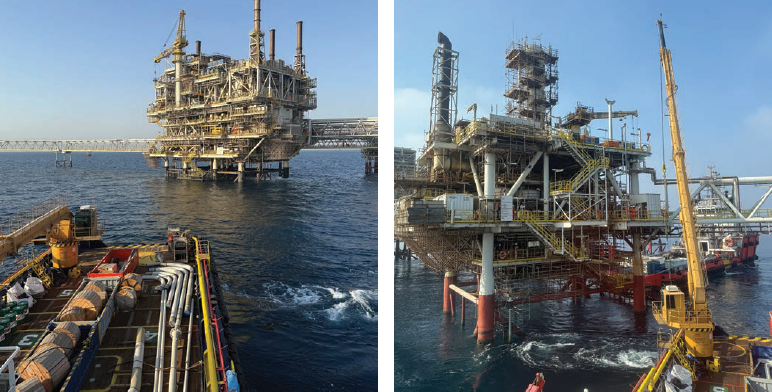
The offshore industry has witnessed remarkable progress in Dynamic Positioning (DP) over the last decades. Computing power, sensor technology, vessel design and automation have significantly improved station-keeping capability. Yet incident investigations continue to demonstrate that many DP events are not caused by equipment failure alone. They often result from a combination of technical issues, operational pressure and human factors. The Senior Dynamic Positioning Operator (SDPO) remains the critical link between technology and operational decision-making.
The SDPO as operational leader
An SDPO is more than an experienced DPO. The role combines technical knowledge with leadership. During offshore operations the bridge team naturally looks to the SDPO for guidance, particularly when conditions deteriorate or abnormal situations develop. These responsibilities require confidence built through experience, continuous learning and disciplined operational practice.
Safe DP operations depend upon communication as much as technology, with BRM principles encouraging open discussion and challenge. The SDPO should ensure that junior DPOs feel comfortable questioning unexpected system behaviour, while engineers should promptly communicate machinery limitations. Effective communication transforms individual observations into collective situational awareness.
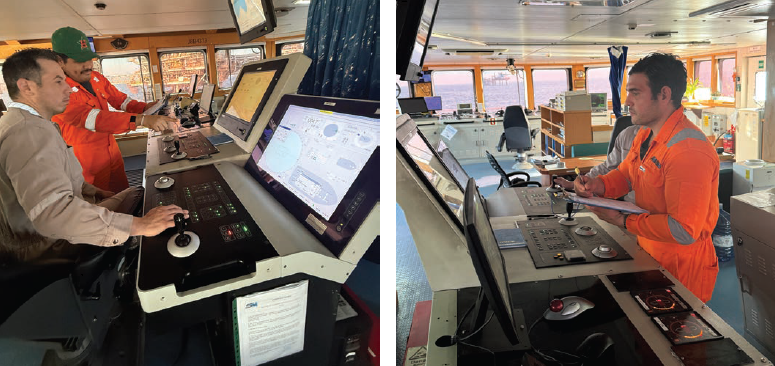
While computers calculate thrust allocation and monitor reference systems, the SDPO interprets risk, exercises judgement and leads the bridge team through routine and abnormal operations alike. The responsibility extends beyond monitoring screens or responding to alarms. The SDPO must constantly interpret information, challenge assumptions, communicate effectively and anticipate how a developing situation may evolve.
Situational awareness
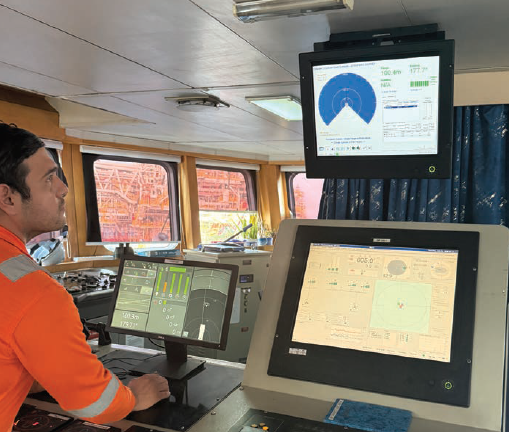
Perhaps the most valuable skill an SDPO develops is situational awareness. Effective monitoring includes wind, waves, current, thruster utilisation, heading stability, position offsets, reference quality, sensor consistency and nearby hazards. Rather than focusing on a single display, the SDPO develops a mental model of the complete operation.
A practical example involved deteriorating weather during cargo operations. Although the vessel remained within position limits, thruster loading steadily increased and one GNSS reference showed intermittent degradation. None of these indications individually required stopping the operation, but together they suggested decreasing operating margin. The bridge team reduced operational exposure, informed the client and prepared contingency actions. Shortly afterwards environmental conditions worsened further. Early recognition avoided unnecessary operational risk.
Trust, verify and monitor
One lesson repeatedly reinforced offshore is that no position reference system should ever be trusted blindly. The SDPO should continuously compare sensor behaviour against vessel motion, gyro information, wind conditions and other independent references. The question should always be: ‘Does this information make operational sense?’
A technically healthy sensor can still provide misleading information if environmental conditions change or the reference geometry deteriorates. GPS, laser systems, hydroacoustic position reference (HPR), taut wire and radar-based references each have their own strengths and limitations.
Decision-making under pressure
Critical operations rarely fail because of a single dramatic event. More often, incidents develop gradually through a sequence of small deviations.
Good SDPOs recognise weak signals before alarms escalate. These include:
- Increasing power demand;
- Progressive sensor degradation;
- Environmental changes;
- Reduced redundancy;
- Growing operator workload.
Applying Activity Specific Operating Guidelines (ASOG) effectively means recognising when Green (activity is safe) is becoming Yellow (operate with increased caution), and when Yellow must become Red (stop!). Conservative decisions made early often prevent emergency decisions later. Stopping or delaying an operation should never be viewed as failure when it prevents a more serious event.
On several occasions, changing environmental conditions, temporary PRS degradation or machinery limitations required slowing operations while additional verification was performed. Although such decisions sometimes affected operational efficiency, they reinforced confidence between vessel crew and client by demonstrating that safety margins would not be compromised. Successful DP operations often pass unnoticed precisely because risks were managed before they became incidents.
Continuous Professional Development
Maintaining competence requires more than licence renewal. SDPOs should actively review incident reports, participate in simulator training, mentor junior operators and share operational lessons across the industry. Continuous Professional Development strengthens both individual performance and organisational resilience.
The future role of the SDPO
Artificial intelligence, improved sensor fusion, remote diagnostics and enhanced automation will continue transforming DP operations. Future systems will detect anomalies earlier and support increasingly sophisticated decision-making. However, technology cannot replace professional judgement, ethical responsibility or leadership. Offshore operations occur in dynamic environments where unexpected combinations of failures and operational pressures still require human interpretation.
Dynamic Positioning remains one of the most advanced technologies used in the maritime industry, yet its safe application depends on the interaction between people, procedures and technology. The Senior Dynamic Positioning Operator occupies a unique position within that relationship.
Dynamic Positioning is fundamentally an interactive technology where human expertise remains the decisive safety factor. As the offshore sector continues to evolve, the most valuable asset on a DP vessel will not be the software or the sensors alone, but the competence, professionalism and integrity of the people who operate them.
DP operations in high risk zones
In recent years, many offshore operations have taken place in regions affected by geopolitical tensions, security concerns, or conflict. Although DP systems operate independently of these external factors, the psychological demands placed upon bridge teams can increase significantly. Uncertainty, security alerts, changes in threat levels, and the knowledge that operations are taking place in a potentially hostile environment may elevate stress even when the vessel itself is not directly involved in a conflict.
The psychology of performance under pressure has long been studied in military, aviation, and emergency response professions. A common finding is that individuals who maintain situational awareness, emotional regulation, and disciplined decision-making perform more consistently than those who react impulsively to stress. For an SDPO, this principle is equally applicable. Mental resilience enables the operator to separate emotion from operational judgement, prioritise tasks, and continue making evidence-based decisions despite external pressures.
A resilient mindset is not simply an innate personal characteristic; it is developed through realistic simulator training, repeated exposure to emergency scenarios, effective Bridge Resource Management, and a culture that encourages preparation rather than improvisation. Teams that rehearse failures together are generally better prepared to respond calmly when real abnormalities occur.
As offshore operations continue to expand into increasingly complex environments, technical competence alone will not define an outstanding SDPO. Mental discipline, ethical leadership, emotional stability, and the ability to inspire confidence throughout the bridge team are equally important. These human qualities remain one of the most effective safety barriers available during critical operations, whether responding to equipment failures, severe weather, or the additional psychological pressures associated with operating during periods of regional instability.
Captain Fernando Gutierrez is a Master Mariner and Senior Dynamic Positioning Operator (SDPO) with operational experience in offshore DP vessels. His professional interests include human factors, DP operations, Bridge Resource Management, offshore safety, and mentoring the next generation of DP professionals.