Seaways Free Article: SAR review
Supporting seafarers in adapting to the changing nature of SAR operations
by Steve Wills, International Maritime Rescue Federation (IMRF)
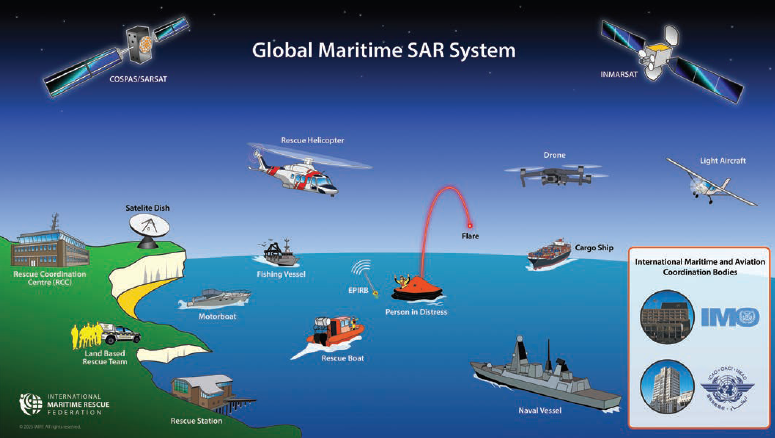
Search and rescue at sea has always been a partnership between states, services, and technologies, but above all, between people. For generations, the world has relied on the skill, judgement and professionalism of seafarers to uphold the oldest obligation in maritime life: to render assistance and rescue those in distress. That obligation remains unchanged. The environment in which it is carried out, however, is evolving rapidly.
New technologies are entering service across the maritime sector. Trade routes are shifting, offshore industries are expanding and contracting, and vessels are operating in regions that were once considered remote or inaccessible. At the same time, coastal states and SAR authorities are facing growing pressures as they seek to maintain effective search and rescue coverage across sometimes vast areas of responsibility.
Against this backdrop, the International Maritime Rescue Federation (IMRF), supported by Lloyd’s Register Foundation, is undertaking the first ever Global Maritime SAR System Review. The 20 month project is examining how effectively the world’s SAR system is functioning, where it is under strain, and how it must evolve. Even as the maritime world changes, the resilience of the global SAR system remains closely tied to the competence, preparedness and professionalism of merchant crews.
Merchant ships respond to thousands of distress alerts each year. In many parts of the world, they are not simply supporting SAR operations; they are the primary, and often the only, rescue asset available. Seafarers have always known this. The review is now documenting that reality on a global scale, providing evidence of just how heavily the wider maritime safety system depends on merchant vessels.
A changing risk landscape
While the duty to assist remains unchanged, the nature of maritime emergencies is becoming increasingly complex. Changing trade routes and expanding maritime activity are taking vessels into regions with limited SAR coverage. Melting Arctic ice, offshore energy developments and shifting patterns of global commerce are increasing activity in areas where merchant ships may be the first, and often only, responders.
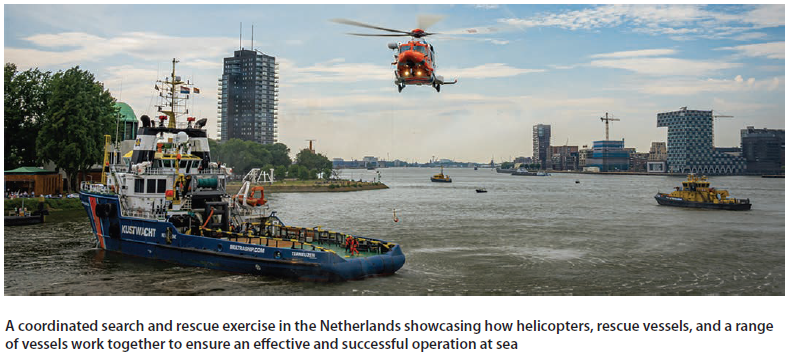
Humanitarian pressures are also reshaping the SAR landscape. Migration, conflict and economic instability continue to drive people to sea in unsafe craft, leading to an increasing number of large-scale humanitarian rescue operations involving merchant vessels. Crews may also find themselves responding to emergencies in areas affected by political tension or armed conflict, or operating during increasingly severe weather events linked to climate volatility. Such operations often require specialised skills, resources and support that extend beyond traditional SAR training.
These scenarios require a blend of seamanship, situational awareness, risk assessment and professional judgement. Technology continues to play an increasingly important role in maritime operations, but these remain fundamentally human skills.
The findings suggest that seafarers continue to meet these challenges with professionalism and determination. However, they often do so without access to the training, equipment or support that increasingly complex rescue operations demand.
Preparedness for modern rescue operations
One of the themes emerging from the review is the variation in preparedness across the global fleet. Many seafarers express confidence in their core seamanship and ship-handling skills. However, confidence levels can differ considerably when it comes to specialist SAR activities such as mass rescue operations, survivor management and coordination procedures. Access to practical, scenario-based SAR training also varies significantly between organisations and regions.
The review identifies notable differences in familiarity with mass rescue procedures, confidence in managing large numbers of survivors, understanding of SAR coordination protocols and access to realistic training exercises. There are also variations in the availability of recovery equipment and medical supplies.
As rescue scenarios become more complex, these differences become increasingly significant. Many seafarers mention feeling well prepared for traditional maritime emergencies but less confident when faced with the humanitarian, medical and operational challenges that can accompany modern rescue operations.
Technology, innovation and new expectations
Autonomous and remotely operated vessels, integrated digital bridge systems, the rise of AI-supported decision tools, satellite-based distress alerting and advanced sensors are changing the way ships operate and the way emergencies are managed. These developments create opportunities to improve alerting, survival, detection and location, coordination and response. Enhanced communications improved situational awareness and predictive technologies all have the potential to strengthen maritime safety.
At the same time, they introduce new challenges. SAR authorities must increasingly consider how they would respond to incidents involving vessels with reduced crews or no crew at all. This brings new challenges for the rescue of and care for survivors on board these vessels.
The review suggests that SAR systems must evolve alongside the technologies being adopted by commercial shipping and those operating at sea. However, while technology can support competence, it cannot replace it. The success of rescue operations still depends on the ability of people to assess situations, make decisions and act effectively under pressure.
The human cost of rescue
For many seafarers, the impact of a rescue operation extends well beyond the immediate emergency. Rescues can be physically demanding, involve risk and require prolonged periods of intense activity, often in difficult environmental conditions. They can also be emotionally challenging. Tragic outcomes, exposure to distressing situations and the responsibility of caring for survivors can leave a lasting impression on those involved.
The review highlights the effects of stress and fatigue following prolonged operations, the emotional impact of unsuccessful outcomes and the sometimes limited availability of postincident support in parts of the industry. It also identifies a need for more structured debriefing processes and greater access to peer support.
Supporting survivors will always be central to SAR operations. However, supporting rescuers is equally important. Access to counselling, structured debriefing, peer support networks and company policies that recognise the emotional impact of rescue operations all have a role to play in strengthening both safety and wellbeing.
Supporting seafarers in a changing environment
The purpose of the review is not simply to identify challenges. It is also intended to help identify practical opportunities for improvement.
One of the clearest messages emerging from the review is that shipping and SAR should not be viewed as separate systems but as components of a wider maritime safety system. International conventions codify the duty to assist, but the true foundation of the system is cultural. Seafarers help others at sea because it is what seafarers do. This ethos remains one of the strongest foundations of global maritime safety. The future of maritime safety will depend on strengthening the partnership between SAR authorities, shipping companies, training providers and seafarers themselves.
Training and competence development and regular skills practice remain central. Seafarers need access to practical SAR training tailored to merchant shipping, realistic mass rescue scenarios, guidance on handling vulnerable survivors and familiarity with emerging technologies and alternative fuel risks.
Equipment and onboard readiness also remain important considerations. The review highlights the need for effective recovery devices suitable for a range of operating conditions, adequate medical supplies for mass casualty situations, clear survivor management procedures and equipment that reflects the practical realities of merchant vessel operations. While some ships already exceed current requirements, others may need additional support as expectations continue to evolve.
Coordination remains another critical area. Seafarers consistently report that effective communication and coordination are among the most important factors influencing successful rescue outcomes. Clear communication protocols, improved integration of digital tools, realistic joint exercises with RCCs and SAR units, and practical guidance for Masters can all contribute to more effective SAR operations.
The review also highlights the importance of ensuring that seafarers themselves continue to shape the future development of SAR. Those who conduct rescues are often best placed to identify what works, what does not and where improvements are needed.
From review to real‑world change
The Global Maritime SAR System Review will conclude its research phase later this year, with the full report scheduled for launch in January 2027. That publication will not mark the end of the process – it will mark the beginning of the real work.
The review is designed not as a static document, but as a tool for advocacy, influence and practical improvement. Its findings will support coastal states, SAR authorities, shipping companies, training providers and international bodies in strengthening the global safety net that protects seafarers and all who travel by sea. The recommendations will only achieve their purpose if they are actively used: to inform policy, shape training, guide investment, and ensure that the realities faced by seafarers are reflected in the systems built to support them.
For more information, updates and resources, visit: www.international-maritime-rescue.org
About the IMRF
The International Maritime Rescue Federation (IMRF) is the world’s leading NGO dedicated to improving maritime search and rescue. Representing rescue organisations, maritime authorities, training institutions and industry partners across more than 50 countries, the IMRF works to strengthen global SAR capability through collaboration, knowledge‑sharing, advocacy and capacity‑building. Its vision is simple and enduring: to prevent loss of life in the world’s waters.