201616 Underway at anchor
Edited from Australian Transport Safety Bureau (ATSB) official report 308-MO-2014-003
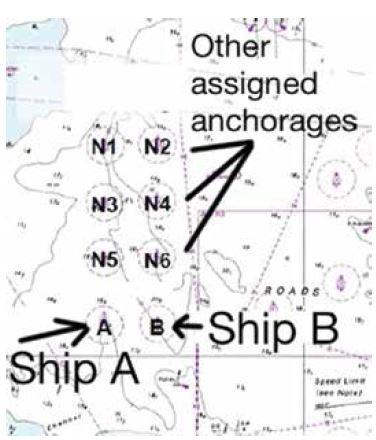
Several ships were at anchorage awaiting berthing space in port. In the early morning, squalls and rain passed across the anchorage and the weather was otherwise stormy with a west-northwest wind at 20+ knots. As a squall with wind gusts up to 56 knots moved across the anchorage, the increased noise from the wind and rain woke the Master of vessel A. He called the bridge and the OOW confirmed they were maintaining position.
At about the same time the OOW on the vessel at anchorage B observed on radar that ship A was moving towards his ship. His calls to ship A on VHF went unanswered. He next attempted to attract the attention of the OOW on ship A by sounding his ship’s whistle. The OOW on ship B then phoned the Master and sounded the ship’s general alarm.
Meanwhile, ship A’s OOW now realised that they were moving eastwards. He phoned the Master and reported that the ship was dragging its anchor and moving at 1.5 knots. Ship A’s deck crew were mustered on the forecastle but saw, to their surprise, that the port anchor cable was missing. The Master instructed them to let go the starboard anchor. Meanwhile, ship B began to veer more cable to try and avoid contact with ship A.
Ship B’s main engine was started as the deck party continued to veer more cable. The Master used the main engine in an attempt to manoeuvre the ship’s bow to port, away from the closing ship A. With collision imminent, ship B’s deck crew retreated from the forecastle; ship A’s starboard quarter then collided with ship B’s bow.
Shortly thereafter, ship A’s main engine was started and run at slow ahead. The Master began to dredge the starboard anchor and move clear of Ship B.
Some of the findings of the official investigation were as follows:
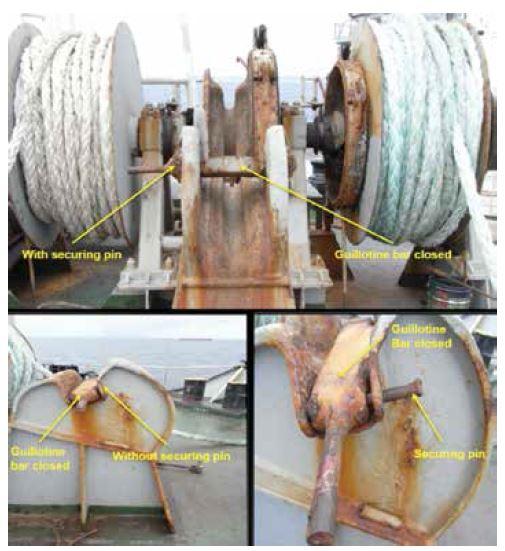
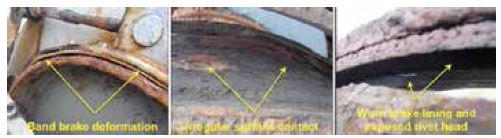
- In adverse weather conditions, the securing pin from ship A’s port anchor chain cable stopper bar worked free. As a result, the guillotine bar opened and the cable’s load came on to the windlass brake, which did not hold. The anchor cable ran out to its bitter end and the entire cable was lost into the sea.
- The poor condition of ship A’s anchoring equipment was indicative of inadequate maintenance. The shipboard management team was not aware of the equipment’s maintenance history, nor was it able to provide relevant documents from the ship’s planned maintenance system.
- As the sole watchkeeper, ship A’s OOW remained on the navigation bridge during the anchor watch. As such, routine rounds of the forecastle deck were not undertaken and no one detected that the cable stopper’s securing pin was working free.
- Ship A’s main engine was not in an appropriate state of readiness for the adverse weather conditions forecast and the warnings issued.
Lessons learned
- The windlass is an essential piece of equipment that should be kept in top notch condition.
- At anchor, rounds to the forecastle deck to check the condition of the anchor and associated gear should be considered best practice.
- While at anchor in adverse weather conditions, the main engine should be on standby.