
202619 Breaking up is never easy
Vessel breaks in two at anchor
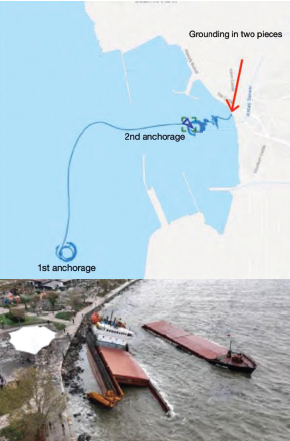
A small general cargo vessel with a crew of 13 arrived in ballast at its loading port and was sent to anchor outside the breakwater to await an available berth. Five days later, and still at anchor outside the breakwater, weather conditions were deteriorating. Strong onshore winds were expected, accompanied by high waves.
Because of its construction and freeboard, the vessel was limited by its Load Line and Class Certificate to ‘20 nautical miles offshore in the Black Sea,’ and to maximum wave heights of 3.5 metres. The vessel’s Master requested permission to seek more protected anchorage inside the harbour breakwater, and this was granted by the port authorities. Days later, with the vessel now at anchor inside the breakwater, the weather deteriorated yet again with winds at over 50 knots. Although the anchorage site inside the breakwater protected the vessel at first, the storm shifted to the southwest, which caused waves to come through the breakwater entrance. The vessel was now exposed to heavy weather and sea conditions. Even with the assistance of the main engine, the vessel could not hold at anchor, and began to drag.
The Master called for tug assistance but due to the dangerous weather the tugs could not leave their berths. It was now too late for a plan B. With the shifting winds and waves, the vessel was exposed to gales and very large waves. Suddenly, with the hull stressed beyond its limits, the vessel broke in two and drifted ashore. Thankfully, all 13 crew were rescued.
Lessons learned
- Even within the confines of port, weather-related wind and waves can affect your anchorage or berth.
- Keep one step ahead of events by having your Plan B ready. In this case, and in retrospect, the only option was to have berthed before the storm.
As edited from UEIM (Türkiye) Investigation Board Decision Number 17/D-05/2024ited from USCG Safety Alert 14-25