

202614 Immersion suit troubles
As edited from USCG (USA) Safety Alert 03-26
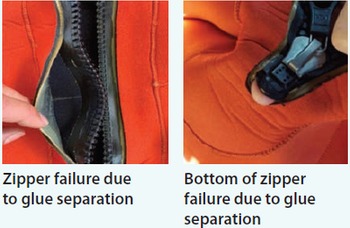
Inspectors frequently find immersion suit defects caused by adhesive failures between the main zipper and the suit body. These failures
compromise watertight integrity and pose serious survival risks from water ingress. Common contributing factors to the defects include:
- improper maintenance (eg, the use of nonapproved petroleum-based lubricants or scented powders);
- improper storage, and
- neglecting to conduct periodic pressure testing.
Seam and closure deterioration may not always be detectable during routine visual inspections. Adhering to manufacturer instructions, IMO regulations and guidance, and performing regular inspections and testing are essential to ensuring immersion suit reliability.
Lessons learned
- Conduct thorough inspections of all immersion suits, focusing on zipper-to-body seams and seam-taped areas such as boots, gloves, and hoods. Check for signs of delamination, seam tape lifting, adhesive failure, and zipper malfunction. Verify zipper function and proper lubrication using only manufacturer approved products.
- Store suits with zippers fully open and use monthly inspections as opportunities for crew donning practice.
- Conduct air pressure leak testing at least every three years, or at more frequent intervals for suits over ten years old.
- Address any identified defects immediately. Ensure repairs are performed by an authorised repair station in accordance with manufacturer instructions, and remove non-functional suits from service.
- Replace any suits that cannot be restored to a watertight condition to the satisfaction of the vessel’s Flag Administration.
- Update maintenance procedures to ensure manufacturer directions are followed and only manufacturer-approved products are utilised to service and maintain equipment.
- Maintain detailed records of inspections, tests, defects, repairs, and replacements.
