
202611 Scrap metal fire
As edited from MAIB (UK) preliminary assessment summary 2/25
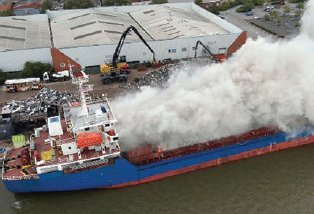
A general cargo carrier was loading scrap metal into its aft cargo hold when the Master observed smoke rising from the hold. He immediately activated the general alarm and called for the shore grab operator to discharge cargo in a bid to remove or expose the source of the fire. Meanwhile, the crew mustered and prepared firefighting equipment.
Two firefighting teams proceeded to the aft cargo hold to apply water from the port and starboard sides. Other crew members cleared the hatch coamings ready for the hatch covers to be closed if necessary. Ashore, the terminal supervisor called the emergency services.
Several shore fire and rescue service appliances arrived soon afterwards. After coordinating with the Master, they started firefighting. The crew evacuated the vessel, and the Master and chief officer monitored the vessel’s draught from the quayside, checking that the vessel’s stability was not compromised by water from the firefighting.
The fire was extinguished the next day. There were no injuries and there was no loss of life. Over several days, crew discharged the contaminated firefighting water from the hold into road tankers for disposal. The scrap cargo was discharged and surveyed to check its composition. The vessel had suffered significant heat damage to structural steelwork in the aft cargo hold.
The preliminary assessment found, among other things, that:
- The fire was likely caused by an undischarged battery or other ignition source causing a spark during loading, which then ignited combustible material in the scrap cargo.
- The scrap cargo had been collected from several sources. The recipient company expected its suppliers to screen their product to remove hazardous material such as combustibles and batteries, but this screening may have been less than adequate, or conversely, the expectations of the recipient company too high.
- Deliveries of scrap cargo were visually checked on arrival. There was no additional sorting and screening facility to ensure that contaminants were not present.
- The cargo had been classified as group C scrap metal under the IMSBC Code, which did not require the shipper to declare hazard identification and cargo composition. However, the scrap cargo contained hazardous impurities, including batteries, oil drums, and oily residues, which posed a fire risk.
Lessons learned
- Appointing a qualified cargo surveying company to assist the vessel’s Master before and during loading is a good risk reduction measure.
- Vessels have capsized at berth due to firefighting efforts by shore teams. Close coordination between the Master and fire chief is needed to properly execute the extinguishing effort without further risk to the vessel.
- As seen in MARS reports 202345, 202346 and 202243, while scrap metal may appear innocuous, it is nonetheless a fire risk because of the prevalence of associated combustible materials often present in this cargo.
- Notwithstanding the successful outcome in this case, for a fire in a hold, it may be safer to close the hatches and ventilation and then discharge the fixed CO2 system than to pour copious amounts of water into the ship, which can negatively affect the vessel’s stability.
As edited from MAIB (UK) preliminary assessment summary 2/25