
202607 Fishing for a living is tiring
As edited from MAIB (UK) report 2025-09
The crew of a fishing vessel landed their catch in port, cooked dinner, and then went home to rest. The skipper, however, remained on board to repair a pump. At about 02:00 the next morning, the skipper completed the repair and recalled the deckhands to the vessel for departure. The boat was underway about 30 minutes later, heading towards the fishing grounds off the port.
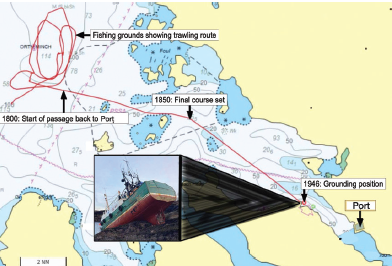
This was the fourth day of a planned eight to nine-day fishing run. At 03:00, the skipper handed the watch over to the two deckhands to complete the passage out to the fishing grounds and went below to rest. He was woken by the deckhands at 07:10 to take the watch so that they could prepare to shoot the net for the first tow of the day. The skipper remained on watch from 07:30, when the tow began, until about midday, when the crew hauled the net up and shot it away again at 12:30.
Following this, the skipper had a light lunch and took the afternoon watch. At 17:30, the second tow was hauled. At about 18:00, having recovered the net and catch, the skipper set a course back towards port. At about 19:30, the skipper felt tired, so he opened the wheelhouse windows to let in some fresh air, had a cup of coffee, then sat in the wheelhouse chair. He soon fell asleep.
About 10-12 minutes later, the fishing vessel grounded hard on rocks while making over 7 kts. The skipper woke up and took the vessel’s engine out of gear and the deckhands, who were working below, came up to see what had happened. The skipper and one deckhand checked the area around the vessel to determine what the vessel had struck. The other deckhand checked the forepeak for damage or water ingress. The crew tried to move the vessel with its engine and by adjusting the power block and trawl doors but were unable to do so.
Following unsuccessful attempts to free the fishing vessel from the rocks, the crew were transferred back to port the next day. The following day, the vessel’s hull had breached and was partially submerged at high water. It was soon declared a constructive total loss.
The investigation found that the early departure meant that the skipper was unable to obtain enough rest to comply with regulations and operate safely. It is likely that the skipper’s decision seemed reasonable at the time because crew were accustomed to feeling tired and the alternative was to miss a day’s fishing. However, the decision did not factor in the chronic sleep debt the skipper and crew were already experiencing.
Lessons learned
- Some decisions seem to make sense at the time but when considering all the factors, usually after an accident or near miss, the logic often fails.
- Never underestimate the performance inhibiting power of fatigue, which has been characterised as similar to that of alcohol. Reaction time, judgment and risk appreciation, among others, are severely reduced.
- If you need coffee and fresh air to stay awake, these are signs that you need rest. Do not sit down before the end of your watch – or call a relief.
As edited from MAIB (UK) report 2025-09