

201864 Grounding while attempting to anchor
Grounding while attempting to anchor
Edited from official MAIB report 9-2018
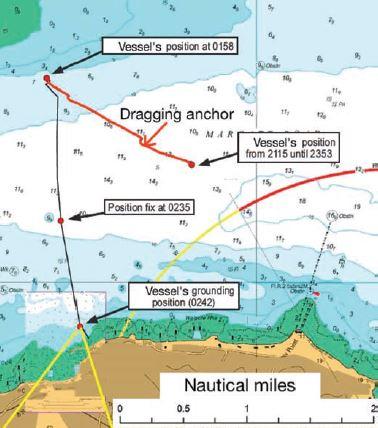
A small coastal trader had loaded and left port, but the Master decided to anchor for the night before continuing to the destination. The starboard anchor was let go with three shackles in the water at 21.15. At 23.00 the Master handed the anchor watch over to the OOW and retired for the night. During his watch the OOW did some chart corrections and worked on the passage plan for the voyage the next day.
About three hours after the OOW had taken the watch a vessel traffic services officer (VTSO) called the vessel as he suspected it was dragging anchor. The OOW checked the position and confirmed they were off station, so he decided to move the vessel farther south. Two crew were sent to lift the anchor and the OOW manoeuvred the vessel south. At one point the VTSO called again because he was concerned that the vessel was now too far south and close to land.
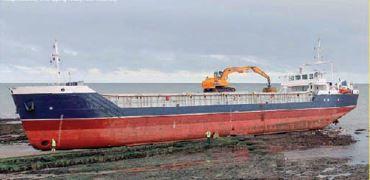
The OOW was navigating visually, apparently without using the radar although at 02.35 he did put a position on the chart using GPS. When the OOW ordered the anchor dropped the vessel was already in trouble. At 02.42, the vessel grounded as it crossed the 0m depth contour. The vessel’s Master was woken up by changes in engine noise and vibration. When the Master arrived on the bridge, he attempted to refloat the vessel by using astern propulsion, but his attempts were unsuccessful.
The wind was from the north-west at Beaufort force 6. While the vessel was at anchor, the predicted tidal stream set to the west and decreased from approximately 1.8kt at 23.50 to 0.8kt at 02.00 the following morning.
Lessons learned
- When anchoring, enough scope must be given to accommodate a rising tide.
- Anchor watch is just as important as a navigation watch. An OOW’s primary duty is to keep a sharp lookout, monitor the vessel’s position and maintain situational awareness.
- If your vessel is dragging anchor, call the Master.